
Remember the film Blood Diamond? I never managed to see it properly; the only time I saw it was on a speeding coach along the coast of Negros in the Philippines this past summer. We were on our way to a beautiful island where one of the CFA staff was from, and were most thrilled when the bus driver decided to show it on the small TV screen at the front of the bus. Feeling hungry (we had got up at 5am), cold (the AC was intent on freezing us) and slightly nauseous from the bumpy ride, I strained to follow the exciting plot.
The film, if you don’t already know, is set in the late 90s in Sierra Leone and tells a tale of a family being broken up by civil war, and about how the father sought to find his lost son who has now been captured by the rebel groups to become a child soldier. The film also showed something that has been happening for decades now – the conflict diamonds which feed many bloodthirsty civil wars in Africa. In such instances, rough diamonds are mined for by civilians who have been captured by rebel groups and sold onto the next stage of the diamond chain for large sums of money, which in turn finance the continuing warfare.
Obviously no one would want to knowingly buy or own any diamond that might potentially have been tainted by “blood”.
The Kimberly Process is an initiative that has been set up since 2000 to ensure that diamonds in the world market are properly accounted for, by imposing extensive requirements on members to shipments of rough diamonds as “conflict free” and thus prevent conflict/blood diamonds from entering into the legitimate trade.
However, the Kimberly Process does not certify individual jewellers. According to their website, as a consumer, you can play your part by requiring the jeweller where you’re purchasing from to answer the following questions:
How can I be sure your jewellery does not contain conflict diamonds?
Do your diamond suppliers participate in the industry’s ‘System of Warranties’*?
Can I see a copy of your company’s policy on conflict diamonds?
*The diamond industry has set up a 'System of Warranties' that complements, but is distinct from, the Kimberley Process. You can find out more here.
I came across a further question about 2 years ago whilst I was working at Tearfund. During one of the lunch time seminars, we were introduced to the ethical jeweller CRED. CRED, I found out, is a jeweller based in the UK which only sells conflict free diamond, but it even goes further to ensure that the diamonds and metal (gold, silver, stainless steel) which they sell are sourced in an environmentally friendly manner and that the workers involved in the exploration and refining are paid a fair wage!
How awesome is that!
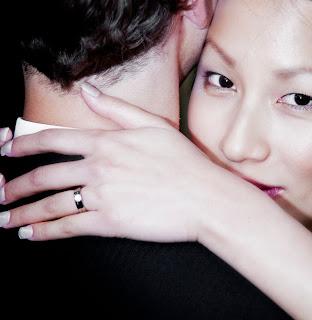
Thankfully, when Rob thought of proposing 1.5 years ago, he had kept the mass email which I sent out about my new discovery of CRED, and he went to CRED and got me a beautiful, conflict free and fair trade diamond ring! (Apparently they had to source the diamond from Canada – as that’s the only place where the stones are definitely free of conflict as well as exploitation!)
CRED makes very beautiful and classic jewelry and has a wide range of engagement and wedding rings too.
For those of you who are married, I’m not suggesting you to go and change your engagement and wedding rings, though I would love to encourage those who have not got rings to please consider CRED (or any other such jeweller, just do a Google search!), and do your extra bit in making our world a more ethical place.

